Roughly 700,000 Miles on One Trailer Cable: A Field Durability Case Study for U.S. Fleets
On June 9, 2026, a 2018 Mercedes-Benz Actros tractor came in for scheduled maintenance and a trailer cable replacement. The odometer stood at roughly 700,000 miles. The cable coming off had been on the truck for eight years. So had its air lines. For a U.S. fleet manager, that is the number that matters, and the rest of this article explains why the same factory now builds to SAE and DOT standards for American tractor-trailers.
Eight years of heavy-duty service on a Daimler-built tractor before the cable was renewed at a scheduled inspection.
Key takeaways
- A 2018 Mercedes-Benz Actros tractor, built by Daimler Truck, the parent company of Freightliner and Western Star, reached roughly 700,000 miles before its original Sertplas trailer cable was replaced on June 9, 2026 during scheduled service.
- The truck's air lines, also Sertplas products, were confirmed as 2018 production and were still in service at the same mileage.
- Inspection found the cable jacket still flexible, no cracking at the bend points, and connector contacts that had resisted corrosion.
- Tractor-trailer cables and air lines operate under constant flexing, torsion, heavy vibration, and thermal shock from -40°F to +185°F.
- For fleets, a truck stranded on the road costs far more than the part, and a failed trailer cord or leaking air line can put a rig out of service at a roadside inspection.
- Sertplas builds to ISO standards for European OEMs and to SAE and FMVSS standards for the U.S. market, through SPNA's stock in Farmington, Michigan. See the ISO-to-SAE comparison below.
The field case at a glance
Documenting how long components actually survive in service is essential to any engineering improvement process. The table below summarizes the vehicle, the event, and what each data point demonstrates.
| Parameter | Field data | What it demonstrates |
|---|---|---|
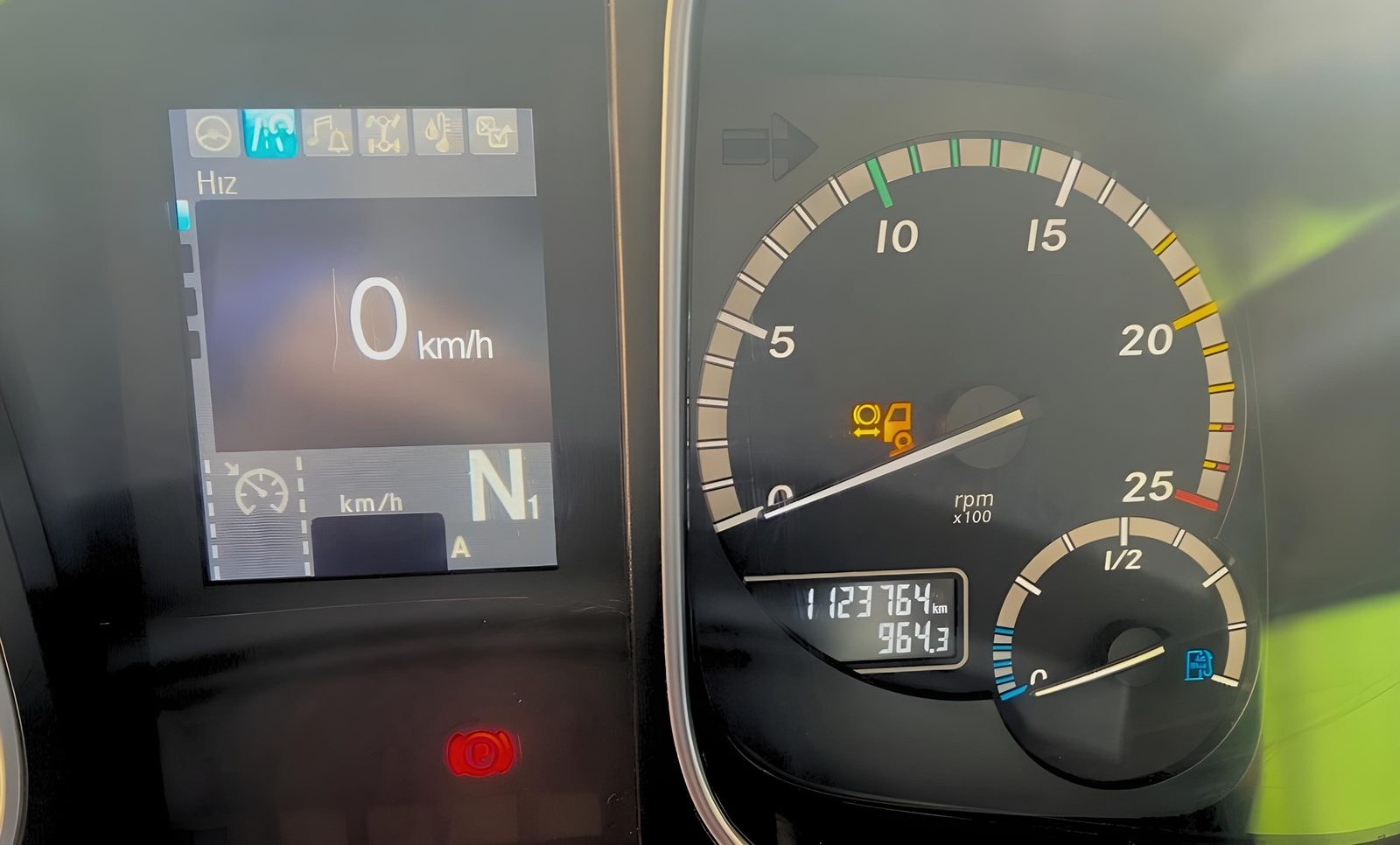
| Total mileage | Roughly 700,000 miles (1,123,764 km on the odometer) | Long-term fatigue and vibration resistance |
| Vehicle and model year | 2018 Mercedes-Benz Actros tractor (Daimler Truck) | Heavy-duty segment; demanding routes and duty cycle |
| Service date | June 9, 2026 | Scheduled inspection and trailer cable replacement |
| Components involved | Trailer electrical (EBS) cable and 2018-production air lines | Polymer flexibility and seal integrity over time |
| Operating environment | -40°F to +185°F, constant flex, road vibration, weather and road salt | Material stability at the molecular level |
From the test lab to the road
In heavy-duty trucking, quality is not something that lives only in a laboratory report, a computer simulation, or the quality-control checks at the end of a production line. Real quality is proven at the moment a part keeps doing its job after the miles pile up, the operating conditions get harder, and the years go by.
The scheduled maintenance and trailer cable replacement carried out on June 9, 2026 demonstrated the field durability of Sertplas's engineering approach in concrete terms. The 2018 Actros had reached roughly 700,000 miles on the day its cable was renewed. That figure is more than a high odometer reading. It represents eight years of the punishing conditions that tractor-trailer components see every day.
What the field photographs show
Instrument cluster and mileage verification
The reading taken from the truck's digital instrument cluster documents the mileage at the time of service. The odometer displays kilometers, as European trucks do; the figure shown converts to roughly 700,000 miles.
Chassis connection points and cable routing
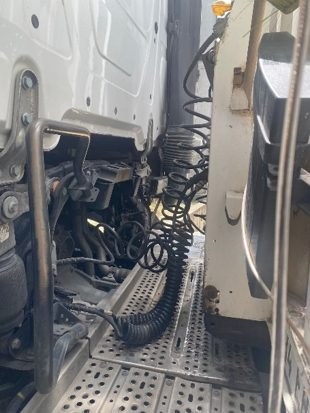
The coiled cables at the connection between tractor and trailer are stretched and flexed on every turn and every backing maneuver. This is the point on the rig where trailer cords most often fail, and the reason drivers and technicians know them by the nickname "pigtails."
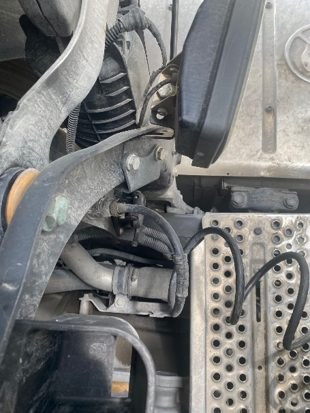
The outer jacket kept its flexibility, no cracks formed at the bend points, and the connector contacts resisted corrosion. Each of those outcomes traces directly to raw-material quality, which is where Sertplas engineering begins.
Engineering and durability: the physical conditions beyond the mileage
Cable and hose groups on heavy-duty trucks live under continuous oscillation, torsion, thermal shock between -40°F and +185°F, and intense mechanical vibration. In much of the United States, add road salt and de-icing brine for four to five months of the year.
Heavy-duty components have to resist impact loads from the road surface, current fluctuations generated by the braking system, and the weather. A part that passes 700,000 miles has shown that its polymer chains have kept their stability at the molecular level.
The inspection carried out during the replacement also confirmed that the air lines on the truck were 2018 production. In other words, while the tractor ran past 700,000 miles between 2018 and 2026, several different Sertplas product groups on that same vehicle continued to perform under real operating conditions.
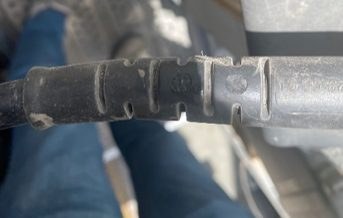
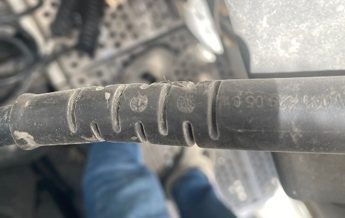
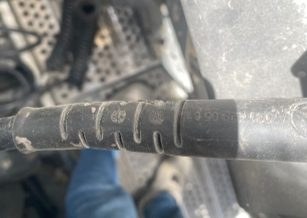
The 2018-production air lines, photographed during the June 2026 inspection.
One factory, two standards systems: ISO for Europe, SAE for North America
The Actros in this case runs EBS, the European electronically controlled braking system, so its trailer connection is built to European ISO standards. U.S. tractor-trailers use a different set of standards, written by SAE International and enforced through the Federal Motor Vehicle Safety Standards (FMVSS). The connectors and couplings are not interchangeable across the two systems, but the engineering problem they solve is the same, and Sertplas manufactures to both.
The table maps each component in the tractor-to-trailer connection to its governing standard on each side of the Atlantic, and to the SPNA product built for the North American version.
| Component | European standard | North American standard | SPNA product for the U.S. |
|---|---|---|---|
| Tractor-to-trailer ABS/EBS electrical connector | ISO 7638 (EBS/ABS connector, 12 V and 24 V) | SAE J560 (7-way connector, 12 V) | 7-way ABS cable assemblies, coiled and straight |
| Trailer electrical connecting cable | ISO 4141 (multi-core connecting cables) | SAE J2394 (7-conductor truck-trailer jumper cable) | 7-pin ABS coiled cable, 12 ft and 15 ft, metal plugs |
| Air brake coupling head (gladhand) | ISO 1728 (pneumatic braking connections, palm couplings) | SAE J318 (gladhand service and emergency couplers) | Gladhand parts |
| Air brake hose and assemblies | UNECE Regulation 13 (braking) and applicable EN hose standards | FMVSS 106 (brake hoses) and SAE J1402 (air brake hose assemblies) | Air brake lines and 3-in-1 Airpower Lines |
| Combined air and electrical assembly | Built to the applicable ISO and UNECE items above | FMVSS 106 for the air lines; SAE J560 and SAE J2394 for the electrical cord | 3-in-1 Airpower Line, 12 ft and 15 ft |
| Quality management system | IATF 16949, ISO 9001, ISO 14001, VDA 6.3 | IATF 16949, ISO 9001, ISO 14001 (the same global standards) | All SPNA products |
Standards listed are the governing specifications for each component type in each market. SPNA's 7-way cable assemblies are built to SAE J560 and SAE J2394, and its 3-in-1 air lines are built to FMVSS 106.
The point of the table is not that the parts are the same. They are not. A J560 plug will not mate with an ISO 7638 socket, and a J318 gladhand will not couple to an ISO 1728 palm coupling. The point is that the same manufacturer, using the same materials science, the same molding and assembly processes, and the same IATF 16949 quality system that a Tier-1 Daimler Truck AG supplier is held to, produces the correct part for each market. The 700,000-mile cable in this case study was an ISO part. The cable a U.S. fleet buys from SPNA is an SAE part, built by the same people to the same standard of durability.
Fleet efficiency and the total-cost-of-ownership view
In trucking, unplanned downtime is the single largest cost item for fleet managers. A truck stranded on the shoulder costs far more in lost time, roadside service, driver hours, and missed delivery windows than the part that failed. There is a second cost that U.S. fleets know well: a chafed trailer cord that kills the trailer ABS lamp, or an air line leaking at the gladhand, is exactly the kind of defect that can put a rig out of service at a roadside inspection.
Long service life
Eight years and roughly 700,000 miles of uninterrupted service translates directly into fewer replacements and lower periodic maintenance spend.
Reliability where it matters
Minimizing the failure risk in braking-system electrical and air lines, both safety-critical, protects driving safety and keeps trucks earning instead of waiting for a service call.
What this means for U.S. fleets, distributors, and shops
The truck in this case study is a Daimler product. Daimler Truck AG is the parent company of Freightliner and Western Star, the tractors that make up a large share of the Class 8 fleet on American highways. Sertplas has been a certified Tier-1 supplier to Daimler Truck AG since 2018, supplying electrical connectors and air brake hose systems into Daimler Truck assembly operations, and has manufactured commercial-vehicle electrical and air-connection components since 1955.
For the U.S. market, SPNA (Sertplas North America) is the authorized distribution arm and stocks the following in Farmington, Michigan, in the metro Detroit area:
- 3-in-1 Airpower Line, 12 ft and 15 ft: the 7-way ABS electrical cord bundled with the red emergency and blue service air lines, with the air lines built to FMVSS 106 and the electrical assembly to SAE J560 and SAE J2394.
- 7-pin ABS coiled cable assemblies with metal plugs, 12 ft and 15 ft.
- Straight ABS cable assemblies with metal connectors, 12 ft and 15 ft.
- Air brake lines, gladhand parts, and plugs and sockets.
Every product page lists the part number, specifications, and cross-references so a parts counter or fleet shop can confirm fitment before ordering. The cross-reference guide maps SPNA part numbers to the numbers most U.S. counters already stock.
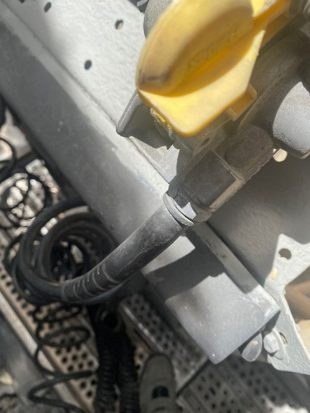
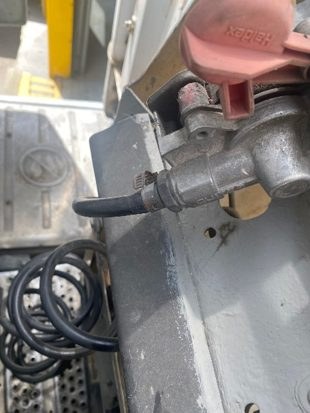
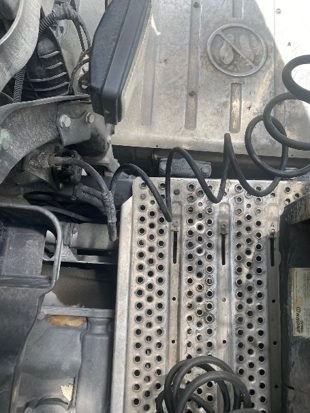
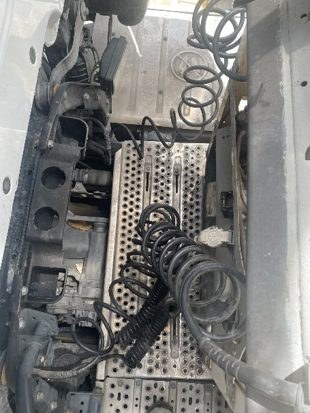
Connection points photographed during the June 9, 2026 service.
Conclusion
The replacement completed on June 9, 2026 on this Mercedes-Benz Actros confirmed, once again, that laboratory results have a concrete counterpart on the road. For Sertplas, product quality is defined not only by a part's properties when it leaves the factory, but by the performance that part delivers years and hundreds of thousands of miles later. Whether the part is built to ISO for a European OEM or to SAE and FMVSS for a U.S. fleet, the standard of durability is the same.
Years pass. Miles add up. Quality keeps proving itself.
Sertplas: our strength is manufacturing, our assurance is quality.
Frequently asked questions
How long does a 7-way trailer cord last on a tractor-trailer?
Service life depends on cable construction, connector quality, flex cycles, and climate, so there is no single answer. This documented field case shows a Sertplas trailer cable that stayed in service for eight years and roughly 700,000 miles on a 2018 Mercedes-Benz Actros before it was replaced during scheduled maintenance. It illustrates what OE-grade construction can achieve; results in other fleets and duty cycles will vary.
What is the difference between an EBS cable (ISO 7638) and a 7-way ABS cable (SAE J560)?
EBS (Electronic Braking System) is the electronically controlled braking standard on European tractor-trailers; its cable carries power and data through an ISO 7638 connector. In North America, the equivalent tractor-to-trailer electrical link is the 7-way SAE J560 connector that supplies the trailer's ABS. The connectors differ, but the engineering job is identical: keeping the braking system's electrical supply intact through millions of flex cycles in all weather.
What is a 3-in-1 airpower line?
A 3-in-1 airpower line bundles the 7-way ABS electrical cord with the red emergency (supply) and blue service (control) air brake lines into one coiled tractor-to-trailer assembly. Bundling keeps the three lines from tangling or chafing and simplifies hookup. SPNA's 3-in-1 Airpower Lines are built with air lines to FMVSS 106 and the electrical assembly to SAE J560 and SAE J2394, and are stocked in Farmington, Michigan.
Were the cable and air lines in this case study Sertplas products?
Yes. According to the Sertplas field report from June 2026, the trailer electrical cable replaced on June 9, 2026 and the vehicle's air lines, confirmed as 2018 production, were Sertplas components that had been in service since the truck was built in 2018.
What conditions do tractor-trailer cables and air lines have to survive?
Constant flexing and stretching during every turn and backing maneuver, torsion, heavy mechanical vibration, thermal shock from -40°F to +185°F, impact loads from the road surface, current fluctuations from the braking system, road salt, and weather. A component that exceeds 700,000 miles under those conditions has kept its polymer chains stable at the molecular level.
Why does trailer cable durability matter for fleet total cost of ownership?
Unplanned downtime is the largest single cost for fleet operators. A truck stranded on the road costs far more in lost time, roadside service, and missed deliveries than the price of the part, and a failed trailer cord or leaking air line can also take a rig out of service at a roadside inspection. A cable that lasts for years cuts periodic maintenance spend and lowers the failure risk in safety-critical braking and air systems.
Does Sertplas build parts to U.S. SAE and DOT standards?
Yes. Sertplas manufactures to European ISO standards for European OEMs and to North American standards for the U.S. market through SPNA (Sertplas North America). SPNA's 7-way cable assemblies are built to SAE J560 and SAE J2394, and its 3-in-1 air lines are built to FMVSS 106, all under an IATF 16949 quality system. Products are stocked in Farmington, Michigan, in the metro Detroit area. Browse the catalog or request a quote.
Specify cables built to go the distance
SAE- and FMVSS-spec tractor-trailer electrical and air-connection components from a Tier-1 Daimler Truck AG supplier, stocked in Michigan for U.S. fleets, distributors, and OEMs.
Source and method: this article is an English adaptation, positioned for the U.S. market, of a Sertplas field report dated June 2026 documenting a scheduled maintenance event on June 9, 2026. Mileage is taken from the vehicle's odometer as photographed (1,123,764 km), converted at 1 km = 0.621371 mi to 698,275 miles and rounded to roughly 700,000 miles. Temperatures are converted from -40°C to +85°C. Photographs were taken during the inspection. Individual results depend on vehicle, duty cycle, climate, and maintenance practice.